Masking and the Fear of Taking up Space
I Didn’t Want to Disturb Anyone (So I Learned How to Disappear)
I’ve been slowly understanding something about myself.
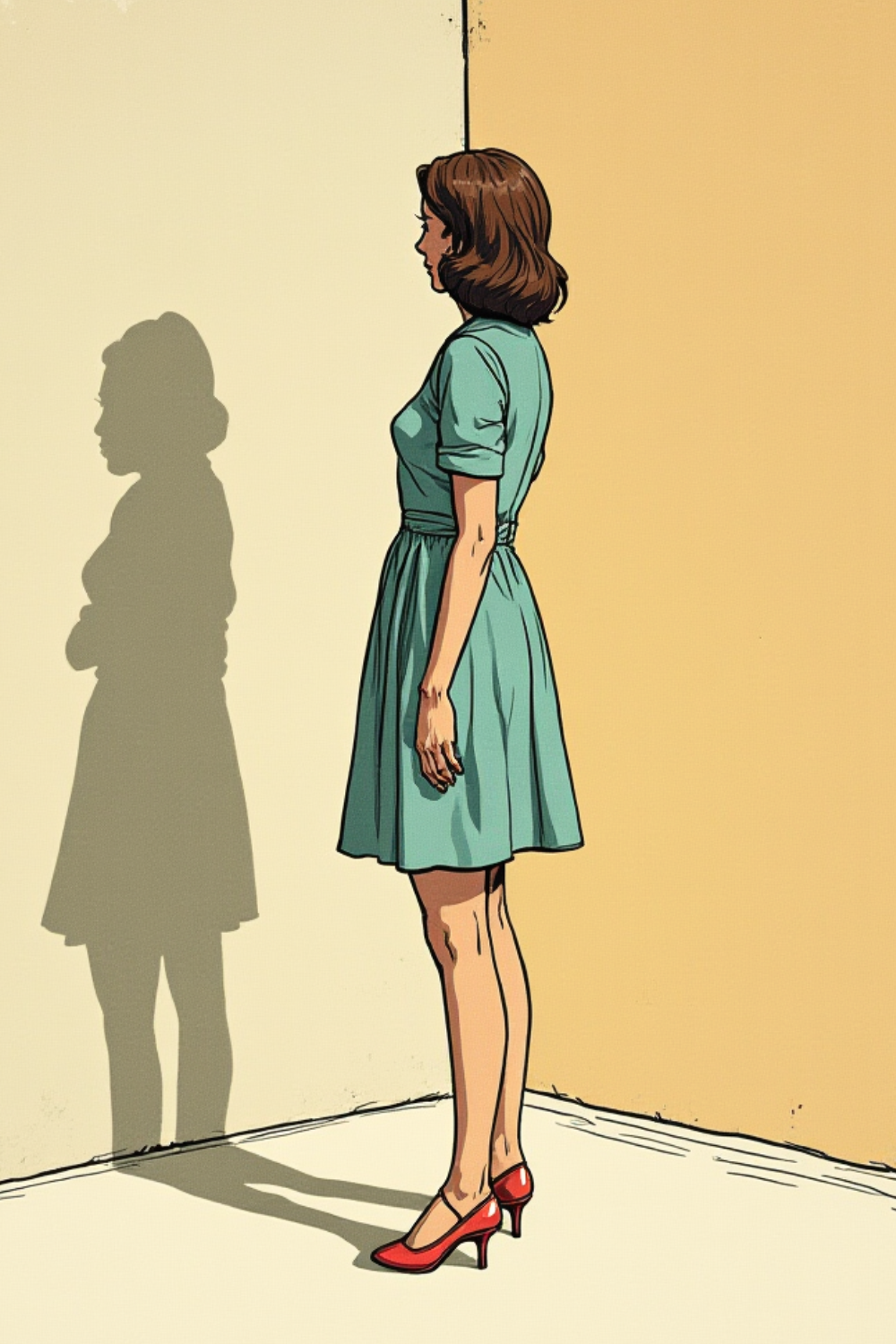
I have spent my entire life trying not to disturb anyone.
Not in big, dramatic ways.
In small, constant ones.
I learned early that my job was to make things easy.
To not cause trouble. Or be weird. Or different.
To not take up space—physically, emotionally, energetically.
And I got very good at it. So good I was quite literally mistaken for a chair once. (Here’s more of the story)
The Invisible Rules I Lived By
I didn’t think of these as rules.
They just felt like reality. I had a job and that job was to make sure I did not call attention to myself.
Don’t wear those clothes. Don’t laugh so loud. Load the dishwasher the right way—or risk tension.
Move quietly.
Speak carefully.
Don’t make anyone uncomfortable.
Even at home, there was a constant low-grade fear of doing something “wrong” and upsetting the balance.
Out in the world, I stayed alert—not for danger, but for attention.
When Hiding Becomes Automatic
I was already seeing this “smallness” in myself, but didn’t realize how major it was until I got present walking my kids to school.
There was one family that drove by in an old VW Bug.
You could hear it from far away.
And every time I heard it getting near, I would suddenly become very busy.
Tying my shoe.
Helping the dog.
Looking up in a tree.
Anything but looking at them.

Because if I made eye contact, they might feel obligated to wave.
And I didn’t want to take even a microsecond of their day.
Afraid of Being a Burden
Let me say that again, because it still stuns me.
I was afraid of causing someone the inconvenience of having to wave back.
Not because they were unkind.
Not because they’d ever given me reason.
Because I believed my presence itself was a disruption.
That’s how deeply trained I was to erase myself.
The Moment I Stopped Mid-Hide
One day, I caught myself doing it again—pretending to be occupied as the car approached.
And inner me had finally decided it was time. So I gave myself a push.
Not dramatically.
Not angrily.
Just a clear, quiet:
The fuck?
So instead of hiding, I looked straight at the car.
And I waved.
They waved back immediately.
Smiled.
Looked genuinely happy to see me.
It wasn’t a burden.
It was a connection.
And in that moment, I realized something that landed hard:
I hadn’t been protecting them.
I’d been disappearing myself.
How Many Ways Do We Do This Without Noticing?
Since then, I’ve started seeing these patterns everywhere.
The way we:
Avoid eye contact
Lower our voices
Apologize for existing
Stay pleasant instead of honest
Make ourselves smaller to keep the peace
Not because we want to.
Because at some point, it felt safer.
For many women—especially those who grew up unseen, ignored, or walking on eggshells—this kind of self-erasure becomes second nature.
It doesn’t feel like fear.
It feels like being good.
Being easy.
Being low maintenance.
Taking Up Space Isn’t What You Think It Is
This isn’t a call to become loud.
Or bold.
Or performatively confident.
I still have to consciously interrupt the instinct to hide.
Being seen does not come naturally to me.
It’s still a practice.
Taking up space doesn’t mean demanding attention.
Sometimes it just means:
Letting yourself be seen
Staying instead of shrinking
Trusting that your presence isn’t a problem
Sometimes it’s as small as a wave.
A Question Worth Sitting With
Where are you still organizing your life around not disturbing anyone?
Where are you hiding—not because you want to—but because it feels safer?
You don’t have to fix it.
You don’t have to change overnight.
Just notice.
That moment of noticing is often the first spark back to yourself.
And sometimes, staying visible for one extra second is enough to begin.